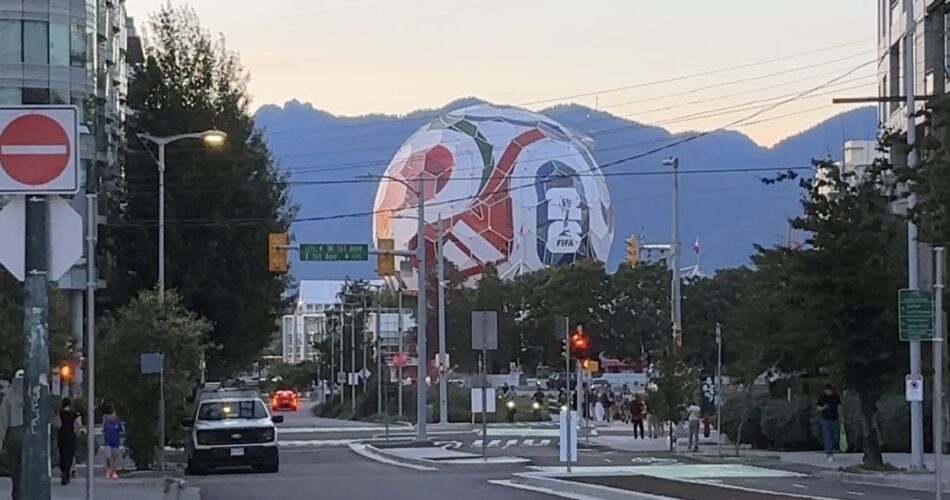
Have you noticed how the media talks about sports? Whether it’s the media, coworkers, friends, or family, it’s so often called the ‘World Cup’ or ‘FIFA’ accompanied by the normalized assumption that one is referring to the Men’s National Team and not the professional and competitive Women’s National Team who also represent your country. Why is that?
Caroline Criado-Perez – the author of Invisible Women (a fantastic book that I highly recommend), would answer that question by explaining how maleness has become our default. When we see something ‘gender-less’ or ‘gender-neutral’ we are used to interpreting it as male. The so-called ‘absence’ of gender does not preclude individuals living within a patriarchal, male-centered society from attaching maleness where there is, supposedly, no gender.
To refer to the Men’s World Cup as simply The World Cup, is to cause the Women’s World Cup to be seen as a deviation from the norm or standard. In the case of the Women’s and Men’s World Cups, there is a division on the basis of gender (which is a whole other conversation), and thus the titles of these tournaments should reflect that organizational system… right?
At work last week I was chatting with a coworker about the Men’s World Cup as my home city – Vancouver would be hosting several of the games. During the conversation I referred to the tournament as the Men’s World Cup and immediately my male coworker responded, “Men’s World Cup… Men’s?” I responded, “Well, there aren’t any women playing, are there?” The conversation ended at that.
I will never know what it must feel like (nor should anyone) to have the entire world and mainstream conversation revolve around you. For many men, being treated as the ‘default’ feels so natural that they fail to notice the extent of it. To name the presence of maleness and therefore acknowledge the existence of femaleness is too much for some people to handle. And this is why we must remind everyone, incessantly.
I write these letters to share my thoughts and discuss topics that are of importance. To offer a space where the status quo can be questioned and challenged. And so I ask all of my readers to do the same. Whether you start by questioning your own biases, or you challenge the assumptions of those around you, these are the actions that begin to create widespread change.
This 2026 Men’s World Cup, I ask you to add the M. When you post about the Men’s match you went to, when you cheer on your Men’s National Team, or when you talk to a friend about how annoyed you are with Men’s FIFA, be sure to add the M. It’s a small, but meaningful step in the direction of changing the way we look at and discuss gender inequalities. Add the M. Make the W more visible.